The Collection
Divine Wind
October 9, 2026
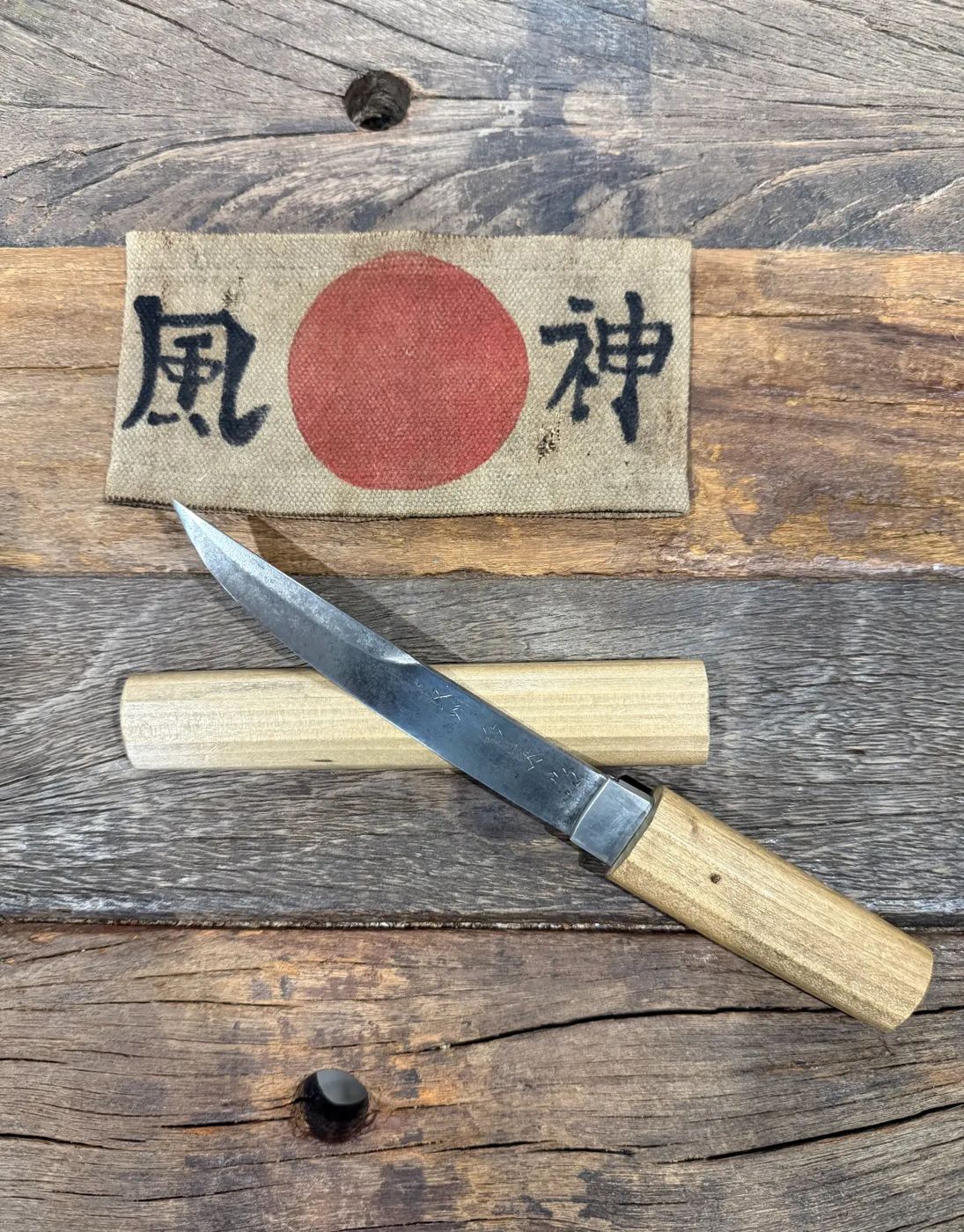
These two pieces are different from everything else in my collection. Everything else belonged to someone who served this country. These came from the other side. I bought them at a World War II auction in New York City.
The first is an armband of heavy canvas with a red sun in the center and two characters in black on either side. Read right to left, the old way, they say kamikaze. Divine wind. The name goes back to 1274 and 1281, when storms wrecked two Mongol invasion fleets off Japan and the country decided heaven had defended it. In the fall of 1944, with the war being lost, Japan's navy borrowed the name for something else.
The second is a short blade in a plain wooden handle and scabbard. Cut into the steel is the name of an old province, Chōshū, followed by what looks like a maker's name. The handle will not come off, so I cannot see the tang, where a traditional smith signs and dates his work. I cannot yet tell you how old it is.
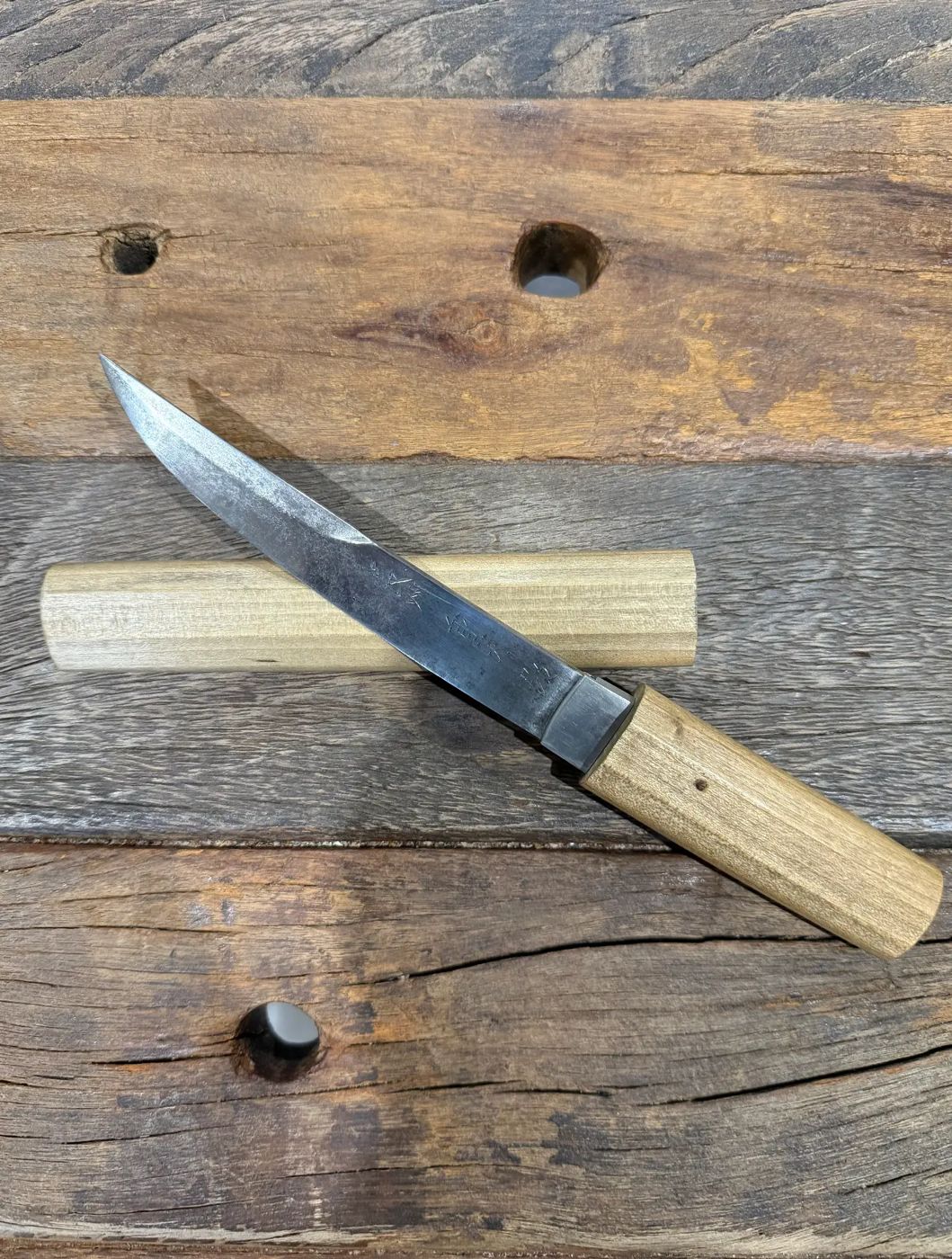
The story that came with them is the one every collector of this material hears. The knife, I was told, was given to a kamikaze pilot so he could end his own life. I spent this week finding out what is true about that, and the honest answer is that the legend is bigger than the record. The pilots died in the impact. Some carried a short blade, bought or given as a gift, as a symbol of the samurai tradition they were raised on. There was never a standard issue, and the market has been full of "kamikaze daggers" since the war ended. Cloth printed with these two characters was common in wartime Japan, and even careful dealers say there is usually no way to know whether a piece ever reached a pilot. I cannot tell you a pilot wore this armband, and I am not going to pretend I can.
What I can tell you is what these things stood for.
In October 1944, Vice Admiral Takijirō Ōnishi organized the first special attack units. Over the next ten months, nearly 3,900 Japanese pilots flew their planes into Allied ships. Thousands of American sailors died on the decks they hit.
Many of those pilots were not hardened fanatics. A lot of them were university students, hastily trained. Officially, every one volunteered. In practice, the pressure to volunteer was enormous.
On August 16, 1945, the day after Japan surrendered, Ōnishi took his own life. The note he left apologized to the young men he had sent to die. It asked the survivors to live, and to rebuild their country in peace.
That note is why I keep these two pieces where I can see them.
Ōnishi built a system that asked young men to die so the men above them could keep going. He called it duty and gave it a divine name. At the end, he knew what he had done.
I have never believed in sacrifice as a leadership tool. When it is demanded from the top down, it is a form of manipulation, almost always tied to a reward the leader controls. Here the reward was a promise of honor after death, made by men who stayed on the ground.
"So Jesus called them together and said, 'You know that the rulers in this world lord it over their people, and officials flaunt their authority over those under them. But among you it will be different. Whoever wants to be a leader among you must be your servant.'"
Mark 10:42-43 (NLT)
Leadership is service, and it runs the other direction. The leader goes first. He carries the weight so the people under him do not have to. A rope-holder never asks someone else to take the fall he would not take himself.
When I hold this blade, I do not think about the enemy. I think about the young men on both ends of those dives, the pilot in the cockpit and the sailor on the deck, and the men far from the fighting who decided both were worth spending.
War is always a tragedy. It is worst when the people in charge forget whose lives they are holding.
Lead from the front, or do not ask anyone to follow.
The Collection · PDF
Keep this one.
Get “Divine Wind” as a printable PDF, with the photographs. Enter your email and it downloads now. You’ll also get the rest of the collection by email, one piece at a time.
Keep reading
More from the writing
Bring this to your team.
Check availability