The Collection
After the Parade
September 28, 2026
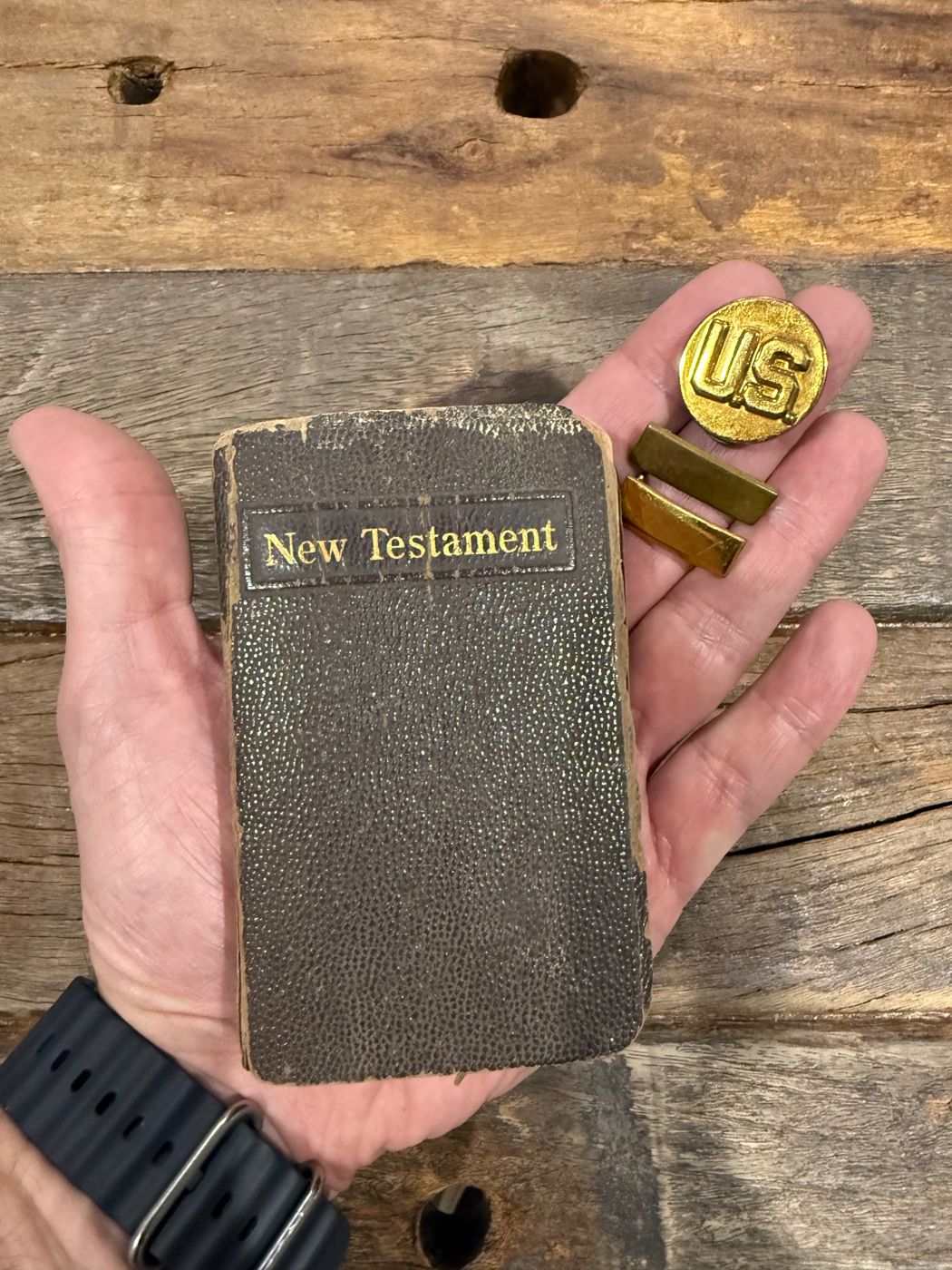
This one came out of an estate sale. A small brown New Testament, red on the edges of the pages, and three pieces of brass that came with it.
On the first page, a man filled in the blanks the way the Army taught him. Name: Pvt. Harold Orlander. Address: 3704th AAF Base Unit, Squadron V, Class 313, Keesler Field, Mississippi. Nearest relative: Evelyn Orlander, Baynes Street, Buffalo, New York.
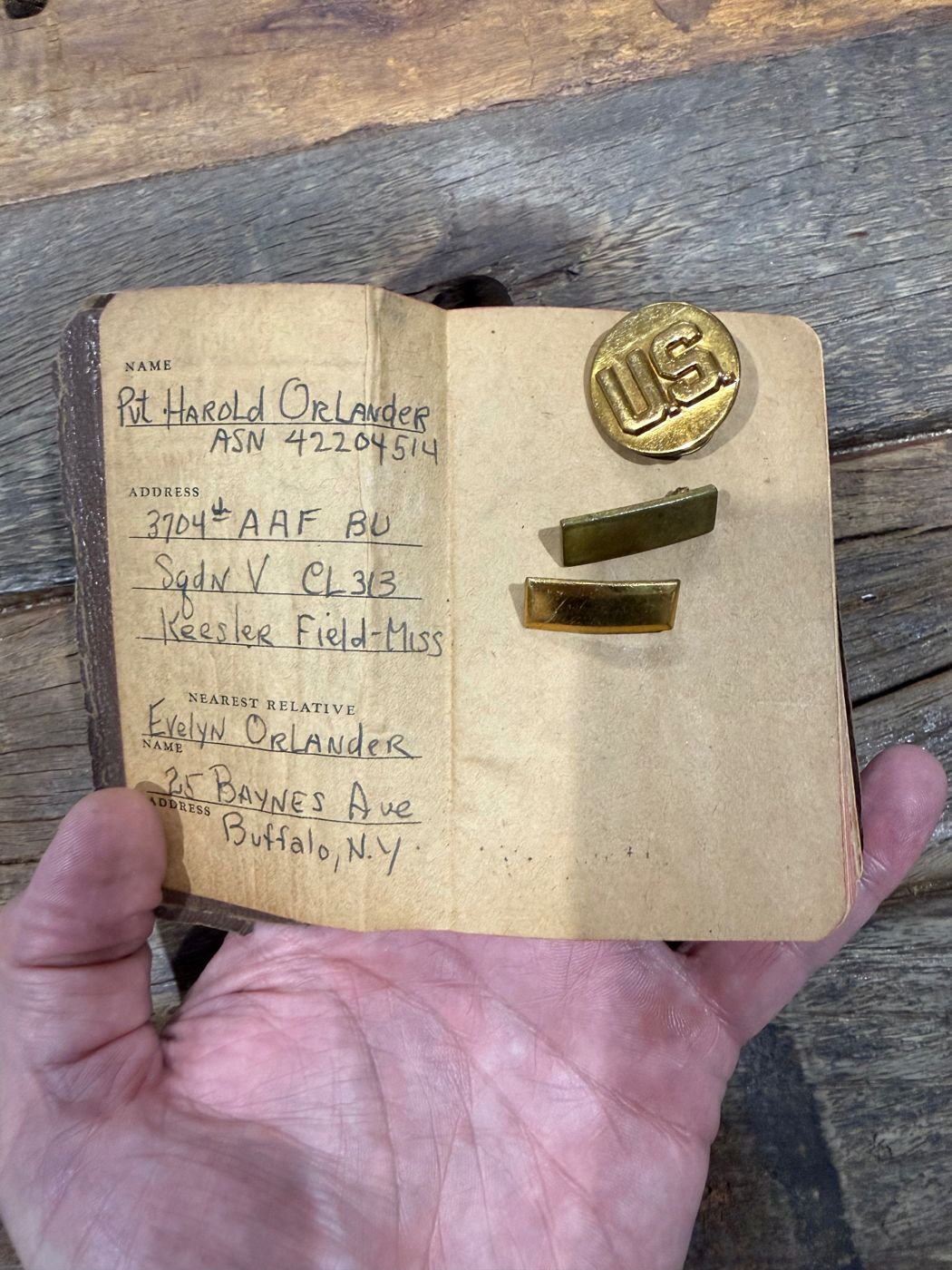
For a while that page was all I had. Then the National Archives filled in the rest.
Harold E. Orlander was born in New York in 1915. He finished grammar school and went to work. By the war he had a job in a machine shop in Buffalo, a city that built airplanes. Every P-40 Warhawk the country made came out of the Curtiss-Wright plants there. He was married. Evelyn was almost certainly his wife.
On May 11, 1945, the Army inducted him in Buffalo. He was about thirty.
Look at that date again. Germany had surrendered three days earlier. The country was celebrating victory in Europe. Harold was a married man with a trade, and he was drafted anyway, for the duration of the war plus six months. The fight in the Pacific was still on, and nobody knew how long it would last.
The Army sent him south to Keesler Field on the Mississippi Gulf Coast, one of the last four places the Army Air Forces still trained new men. The Army's own history explains the rest of his address. A recruit was assigned to a flight, and the flight was treated as a class. Its men went through every phase together. Eight weeks of drill, marches, nights in bivouac, the rifle range, the gas chamber, and a physical program built on the idea that a man should give until it hurts.
Class 313 was almost certainly Harold's flight. A thirty-year-old machinist from Buffalo, drilling, eating, and sleeping beside strangers until they could count on each other.
Eight weeks from late May carries you into the heat of a Mississippi July. In the middle of August, Japan surrendered. The war Harold was drafted to finish ended, most likely while he was still in Mississippi.
He never made a headline. As far as anything I can find tells me, he never saw combat. He went where he was sent.
And he carried the book. The corners are worn round from riding in a pocket and being pulled out, over and over. Faith in a foxhole makes sense to everybody. Faith on an ordinary Tuesday in a Mississippi barracks, far from your wife, is the kind that holds a life together.
"Work willingly at whatever you do, as though you were working for the Lord rather than for people."
Colossians 3:23 (NLT)
The building he gave as Evelyn's address still stands on Buffalo's West Side: two stories, four apartments, built in 1920. That summer the war in Europe was over, and her husband had gone south anyway. If anything had happened to him, that is where the news would have gone.
The brass tells its own story. One piece is the U.S. disc every enlisted man wore on his right collar. The other two are gold bars, the rank of a second lieutenant. A private did not wear those, and a man drafted in the war's last summer was unlikely to earn them. My guess is they belonged to someone else and found their way to his book somewhere between that estate sale and me. That is the next thread I am pulling.
Harold was drafted after the parade. Nobody writes songs about a thirty-year-old machinist reporting for basic training three days after V-E Day. He went anyway. He learned the work. He did it with his whole heart for people who would never know his name.
The Army understood something when it built Class 313. You do not train a man alone. You put him in a flight, and the flight rises or falls together.
That is what the collection keeps teaching me. A great many of the people who served never fired a shot at anyone. They held the rope a long way back from the edge, and the men at the edge were alive because of it. Nobody claps for that position. It is still the job.
Leadership is service, and most service looks like Harold's. Show up when the glory is already spoken for. Learn the work. Do it well where nobody is watching. Carry your faith into the ordinary days, because that is where most of your life, and most of your leading, will happen.
Harold wrote down where he was and who to call. Then he went to work.
Keep reading
More from the writing
Bring this to your team.
Check availabilityThe Collection
Get the next one in your inbox.
One artifact a week, and what it taught me about leading by service. Leave whenever you like.